Although local dental anesthesia provides, in most cases, painless treatment, the patient remains conscious and may feel vibrations, pressures, noises and smells.
Fear of needles, as well as the specific sensations of local anesthesia, can cause discomfort, and in some patients even anxiety and stress. All these can influence the success of the treatment, usually the surgical one. A stressed patient, with fear or even phobia of the dentist, makes the doctor’s work difficult, which will also increase the duration of the intervention.
The good news is that in our clinic in Chișinău, such patients can benefit from dental treatment under general anesthesia or conscious sedation.
When do you need General Anesthesia?
In what situations do patients turn to Punto Bianco for general anesthesia?
- any surgical, therapeutic or orthopedic (prosthetic) treatment in cases of advanced gag reflex;
- severe fear of dentist (phobia, panic attacks);
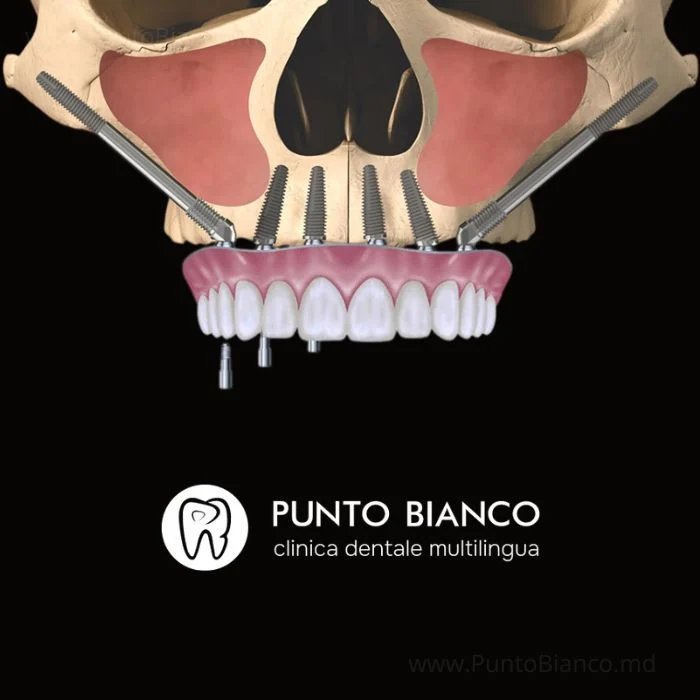
- installation of special implants: zygomatic/transnasal/pterygoid;
- more invasive procedures such as sinus lifting, bone augmentations and reconstructions;
- extraction of molars/wisdom teeth;
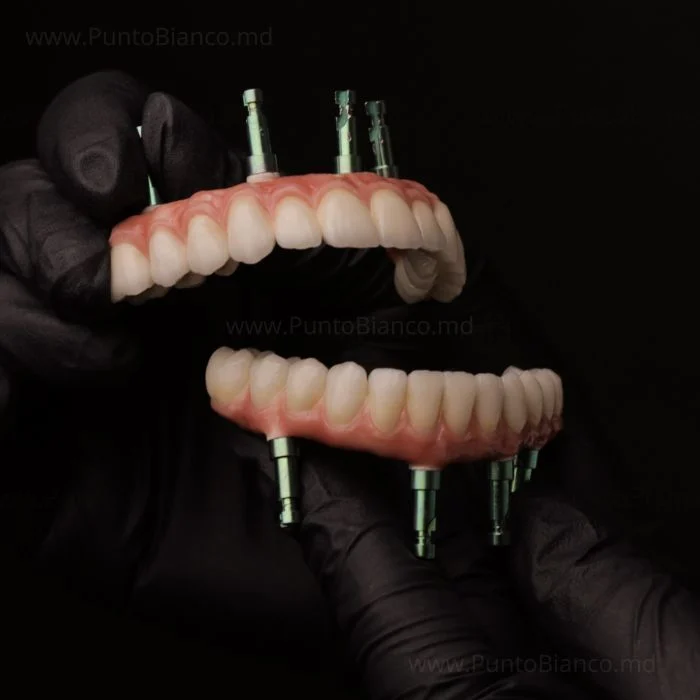
- insertion of a larger number of implants on both jaws to significantly reduce time.
Advantages of general anesthesia
Patient comfort
General anesthesia makes the procedure seem instantaneous, eliminating the sensation of discomfort during the intervention.
Physical and psychological health
General anesthesia reduces stress, ensuring deep sleep and keeping airways clear, preventing choking risks. Also, the patient does not experience the visual, auditory or sensory trauma of the intervention.
Efficiency
The patient is completely asleep, which makes procedures faster and easier for everyone.
Safety
General anesthesia not only increases comfort, but also safety in the case of complex procedures, such as zygomatic implants.
Are there different types of General Anesthesia?
General anesthesia with intubation
In dentistry, general anesthesia with intubation is used in complex cases, with the patient being completely unconscious, with breathing mechanically assisted through an endotracheal tube. This allows the doctor to perform long or difficult procedures without discomfort for the patient.
General anesthesia with spontaneous breathing (intravenous)
The patient is unconscious but maintains natural breathing, and medications are administered intravenously. This method is used for dental interventions that require a shorter period of unconsciousness and a high degree of control.
Deep conscious sedation
The patient is very relaxed and in a state of semiconsciousness, but can respond to stimuli, being used for more difficult dental procedures that require reduction of anxiety and pain.
Light sedation
The patient is conscious and relaxed, with a state of calm, but without losing complete control, being suitable for minor dental interventions or for anxious patients.
Stages of general anesthesia in dentistry
What, when and how we do at Punto Bianco clinic in Chișinău
1
Primary consultation with the specialist doctor
We resort to general anesthesia with a specific purpose, namely to perform a dental intervention or treatment. Therefore, it is essential, first of all, to consult the dentist to establish a treatment plan and decide together whether you need general anesthesia or if there are alternative methods.
2
Referral for medical tests
If the need for intervention under sedation or general anesthesia is confirmed, you will receive referrals for medical tests. These include mandatory: blood tests, cardiogram and chest X-ray. If necessary, you will be accompanied by a clinic representative to our medical partners to perform them without wasting time and also benefit from special prices for Punto Bianco clinic patients.
3
Consultation with the anesthesiologist
The next important step is the consultation with the anesthesiologist. He will analyze your general health condition, medical tests, and ask you additional questions. In some cases you will be referred to other specialists for consultation. Following the consultation, we will receive confirmation from the anesthesiologist that we can safely perform the planned dental interventions for your health.
4
Performing the intervention/dental treatments “under sleep”
On the day of the intervention, the anesthesiologist will induce you into a state of relaxation and deep sleep and will monitor your condition throughout the treatment. Our team of doctors will perform all planned procedures while you sleep #WithoutFear #WithoutPain #WithoutUnpleasantMemories